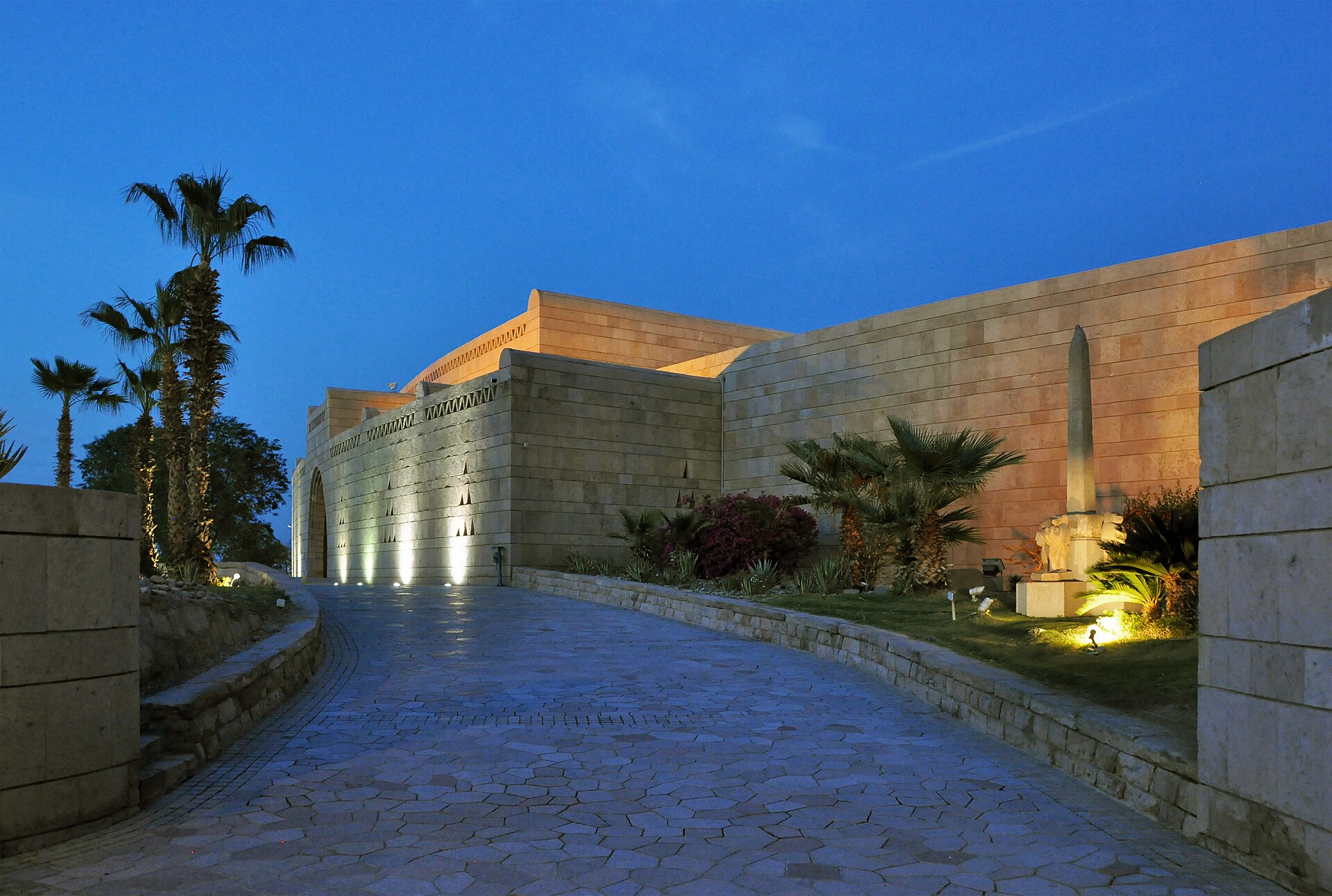
The Nubian Museum in Aswan is the only major Egyptian institution dedicated to a civilisation other than the pharaonic. It opened on 23 November 1997 after more than a decade of planning, and its existence is inseparable from one of the largest salvage-archaeology operations in history: the UNESCO-coordinated International Campaign to Save the Monuments of Nubia, which ran from 1960 to 1980. Without that campaign, Lower Nubia — the 500-kilometre stretch of the Nile valley between Aswan and the Sudanese border — would now lie entirely beneath the waters of Lake Nasser. The campaign saved what could be saved. The Nubian Museum exists to display and interpret what was saved, and to tell the story of the people whose valley the waters took.
The campaign and its aftermath
When the Egyptian government decided, in the late 1950s, to build the Aswan High Dam to regulate the Nile's annual flood and generate hydroelectric power, the flooding of a vast area of Lower Nubia was an unavoidable consequence. The region contained dozens of archaeological sites dating from the Paleolithic through the Roman, Christian, and Islamic periods, as well as the inhabited villages of roughly 100,000 Nubian people whose families had lived along the river for centuries.
UNESCO issued an international appeal in 1960. Fifty countries responded. Over the next two decades, archaeological teams from more than twenty nations documented the sites of Lower Nubia and, where the material permitted, physically moved selected monuments to higher ground. The most famous of these relocations was Abu Simbel — the twin rock-cut temples of Ramesses II and Nefertari, which were cut into blocks, moved sixty metres up and two hundred metres back from the river, and reassembled. The temples of Philae, Kalabsha, Wadi al-Sebua, Dakka, Maharraqa, Amada, and Derr were also relocated, in each case to sites carefully selected to preserve their relationship with the landscape.
The Nubian population was resettled, in two major movements, to agricultural villages north of the new lake. The villages of Old Nubia were abandoned, photographed, and then flooded. An enormous quantity of ethnographic material — household objects, textiles, photographs, oral recordings — was collected before the move. A substantial portion of that material is now held by the Nubian Museum.
The museum and its architecture
The museum occupies a sloping site south of Aswan, overlooking the Fatimid cemetery and, beyond it, the Nile itself. The building, designed by the Egyptian architect Mahmoud El-Hakim (who also designed the Luxor Museum twenty years earlier), is organised as a series of low pavilions stepping down the slope, clad in local stone, with a principal gallery that opens onto an outdoor sculpture terrace. The architecture won the Aga Khan Award for Architecture in 2001, and it remains one of the most successful museum buildings in Egypt.
The exterior setting is as important as the interior. A landscape garden occupies most of the museum's grounds, laid out as a miniature of the Nile valley, with a water channel, planted banks, and relocated rock carvings from sites now beneath the lake. The garden is part museum, part memorial: a way of keeping the drowned landscape present in the memory of visitors.
The chronological gallery
Inside, the main gallery tells the story of Nubia from the Paleolithic to the present. The display is chronological, spanning perhaps 200,000 years of human presence along the Nubian stretch of the Nile. Objects of particular significance include:
- Paleolithic hand-axes from sites near Wadi Halfa, among the oldest tools in the museum.
- Ceramics from the A-Group and C-Group cultures, the indigenous Nubian societies that preceded and were in contact with Old-Kingdom Egypt.
- A-Group royal burials from Qustul, which have been read by some scholars as evidence that complex state formation may have begun in Nubia as early as, or earlier than, in Egypt proper.
- Kerma-culture material from the Kingdom of Kush (c. 2500–1500 BCE), including the distinctive red-burnished pottery and the tulip beakers for which Kerma is known.
- Objects from the Napatan and Meroitic periods — the age of the Black Pharaohs of the Twenty-Fifth Dynasty and the later Meroitic kingdom that ruled from south of the third cataract.
- Christian-period material from the medieval kingdoms of Nobatia, Makuria, and Alodia, including painted fragments from the cathedral at Faras, whose murals are among the most important works of Christian art surviving from medieval Africa.
- Islamic and Ottoman-period objects, and the extensive ethnographic collection documenting Old Nubian village life before 1963.
The ethnographic village
A section of the museum — both indoors and outdoors — is devoted specifically to the Old Nubian villages that were lost to the lake. A reconstructed Nubian house, built to the traditional pattern with whitewashed walls, vaulted roofing, and decorated façades, stands in the museum's grounds. Inside it, a typical interior has been recreated using original objects: basketry, copper utensils, bridal costume, the distinctive palm-rib bed. Photographs of Old Nubian villages, many of them taken during the 1960s documentation campaign, line the walls of the adjacent indoor gallery.
The ethnographic section is, in our view, what makes the Nubian Museum distinctive among Egyptian institutions. It is one of the few places in the country where the category of intangible cultural heritage — language, music, social custom, architectural tradition — is treated with the same seriousness as physical artefact.
The Faras murals
Among the most important objects in the museum are the fragments of medieval Christian wall painting rescued from the cathedral at Faras. The Polish archaeological mission that excavated Faras in 1961–1964 recovered approximately 169 paintings from the cathedral walls, dated between the eighth and the fourteenth centuries. Under the terms of the finds division at the end of the excavation, the paintings were split between Poland (where they are now in the National Museum in Warsaw) and Sudan and Egypt. The Nubian Museum holds a number of the Egyptian share, including portraits of Nubian kings, bishops, and the Virgin Mary in distinctively Nubian iconography.
The Faras paintings matter because they are some of the very few figurative works to survive from medieval Nubia, and because they demonstrate — against a persistent tendency in earlier scholarship to regard medieval Nubia as peripheral — the existence of a sophisticated Christian artistic tradition that was the peer of Byzantine and Coptic contemporaries.
Practical notes
The Nubian Museum is located in the southern part of Aswan, a ten-minute taxi ride from the city centre or the railway station. It is open daily, with the standard split-session opening hours (morning session, afternoon break, evening session). Admission is sold at the gate. Photography is permitted in most galleries.
We recommend allowing at least two and a half hours for the visit and, if possible, combining it with a walk through the Fatimid cemetery immediately downhill of the museum and, later in the day, with a visit to Philae temple on Agilkia Island. The logic of the combined itinerary — landscape, cemetery, museum, relocated temple — is precisely the logic of the Nubian salvage campaign itself.
A closing note
The Nubian Museum is, at its heart, a museum about loss and response. The civilisation it represents has not vanished — Nubian communities continue to live in Upper Egypt and in northern Sudan, and Nubian language, music, and social tradition remain vital — but its physical valley has gone beneath the water, and the museum is, in a real sense, the memorial that the lake does not provide. Visitors who leave the galleries and stand in the outdoor garden, looking over the Nile toward the High Dam in the distance, are asked implicitly to hold two things in mind at once: the scale of what the dam made possible, and the scale of what it cost.

Dina Saleh
Based in Aswan, Dina writes about Nubian heritage, Coptic history, and museums outside the Cairo-Giza corridor. Her work has appeared in regional heritage journals.
More from our archive
 Cairo
Cairo
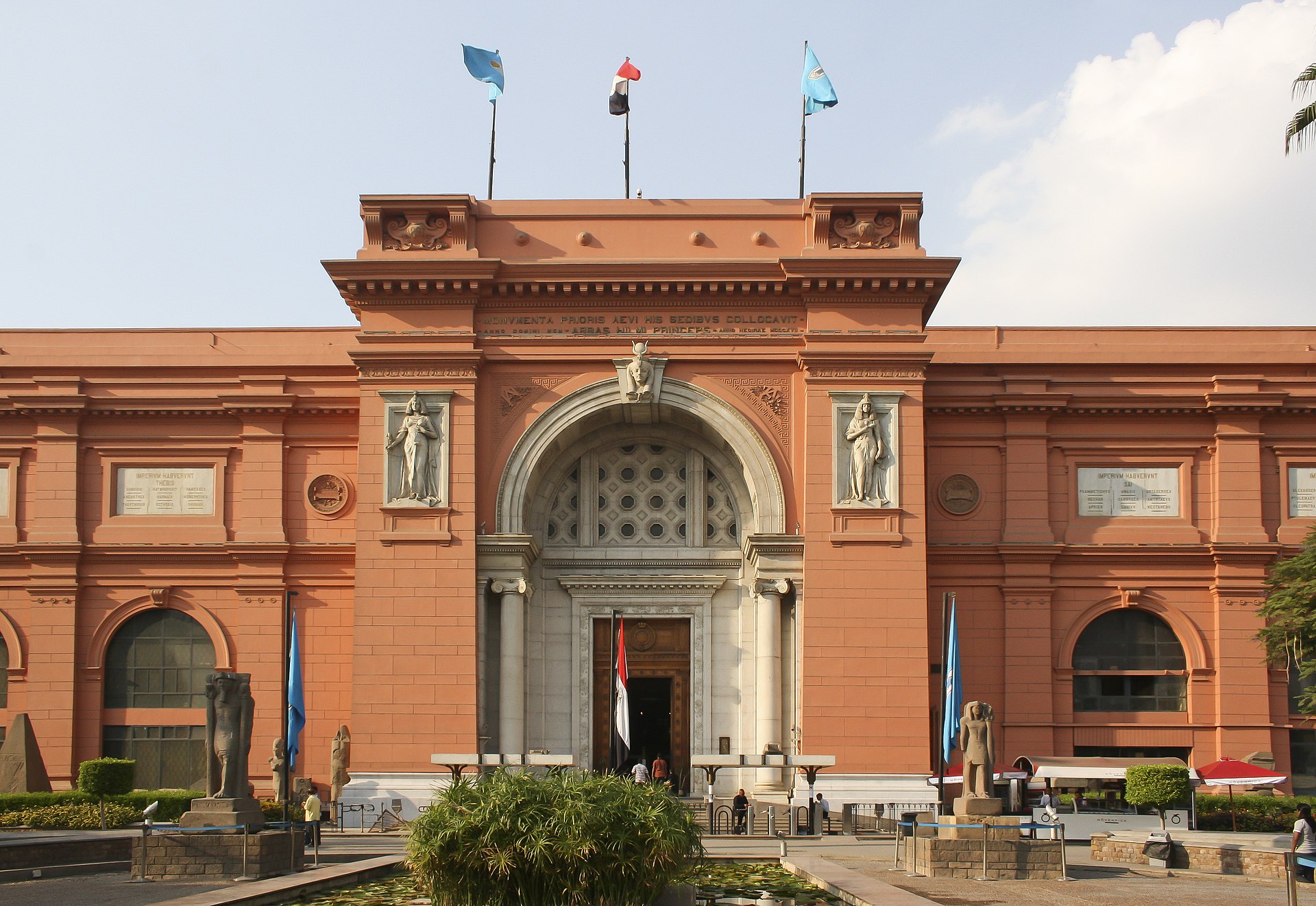
The Egyptian Museum in Cairo: A Journey Through 120 Years of History
Founded in 1902, the Tahrir Square institution holds the world's largest collection of pharaonic antiquities. A look at its architecture, its most iconic halls, and what remains after the Tutankhamun collection moved to GEM.
 Giza
Giza
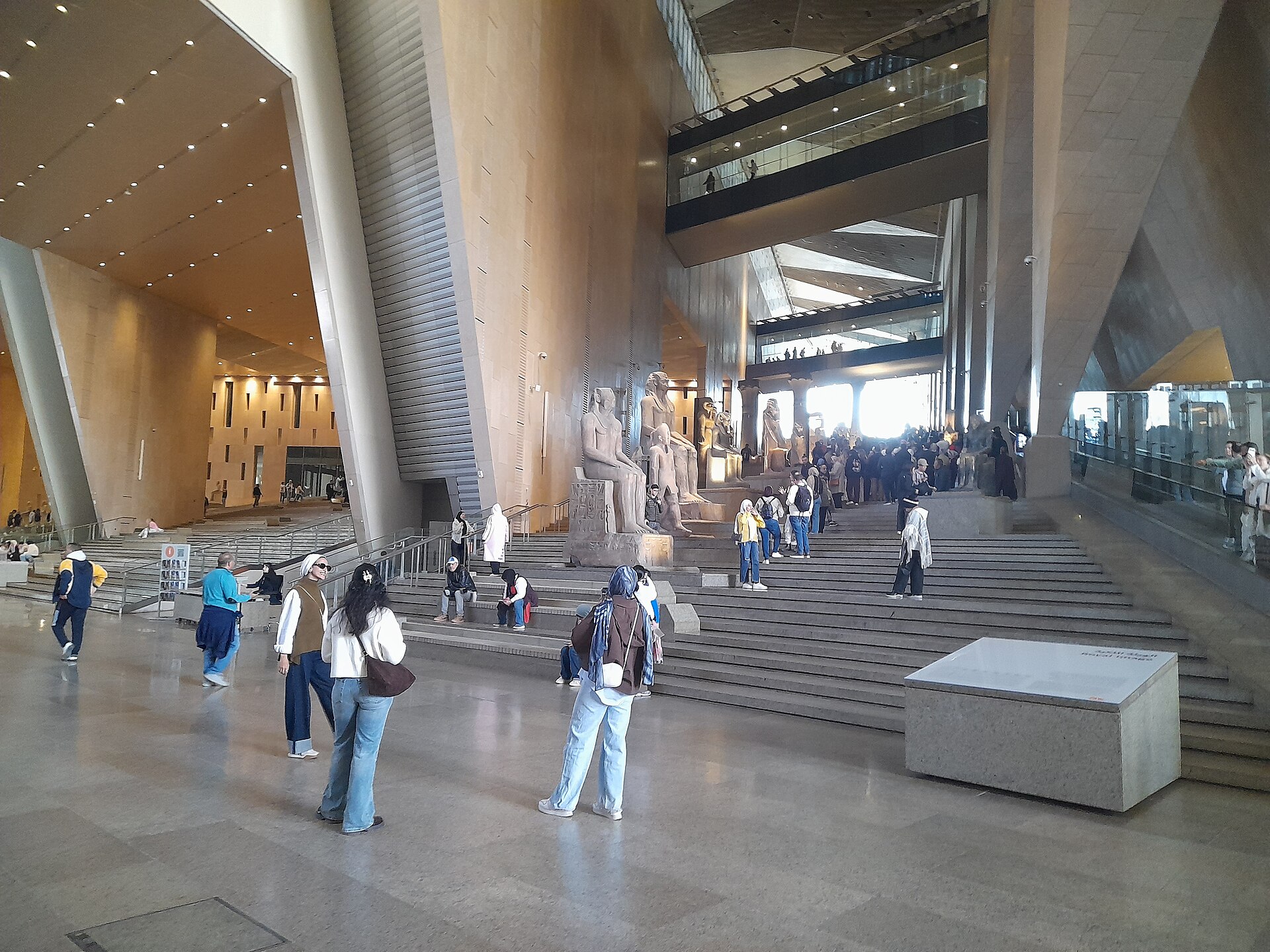
The Grand Egyptian Museum (GEM): The World's Largest Archaeological Complex
After more than two decades in the making, the Grand Egyptian Museum near the Giza Plateau is now the defining institution for the pharaonic era. Inside its halls, its scale, and the full Tutankhamun collection on public display for the first time.
 Cairo
Cairo
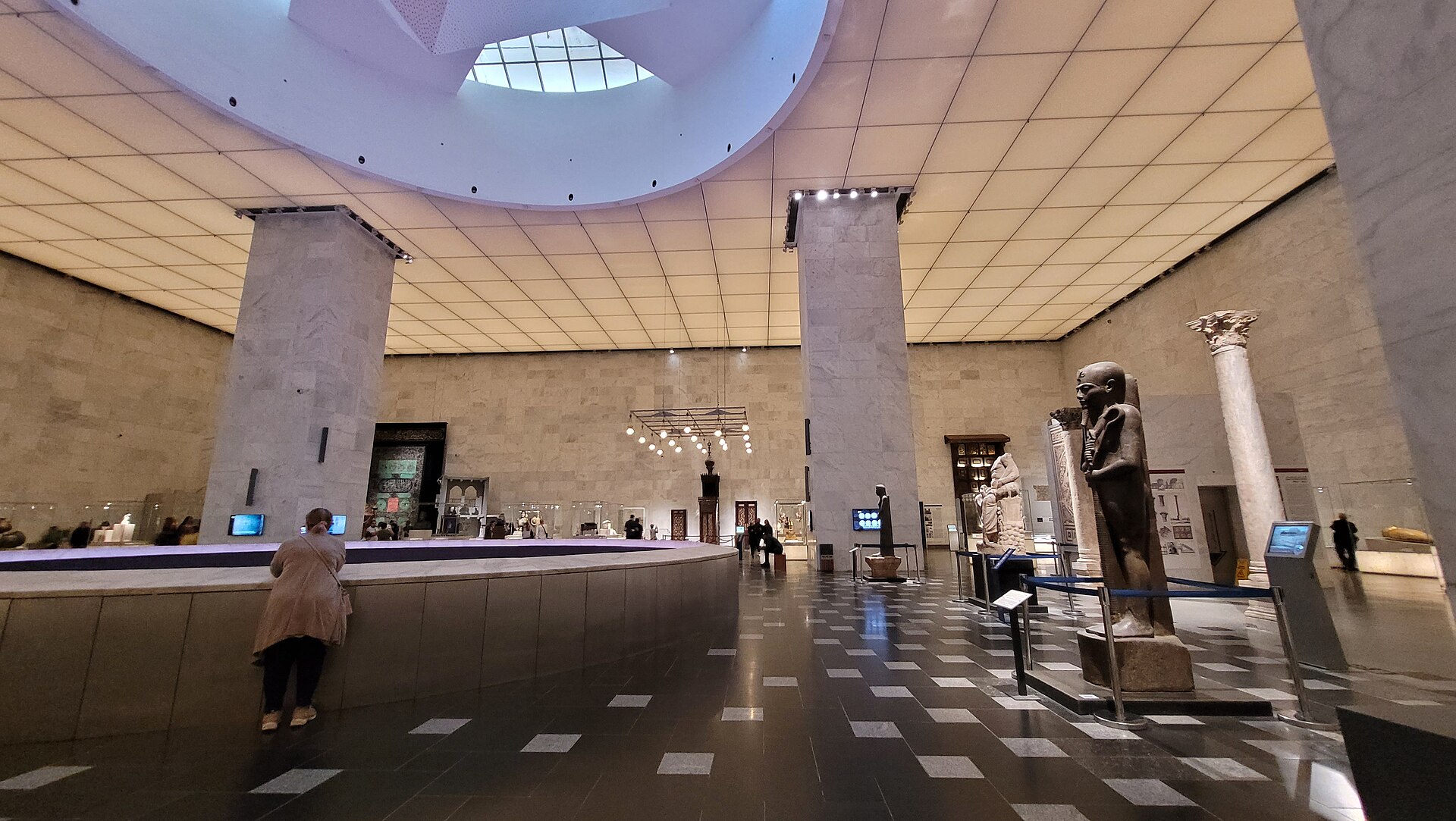
The National Museum of Egyptian Civilization (NMEC): From Prehistory to Modernity
The NMEC in Fustat is the only Egyptian institution telling the full national story — from prehistoric settlements to contemporary Egypt. Its Royal Mummies Hall, the 2021 Pharaohs' Golden Parade, and what makes its curatorial approach distinctive.