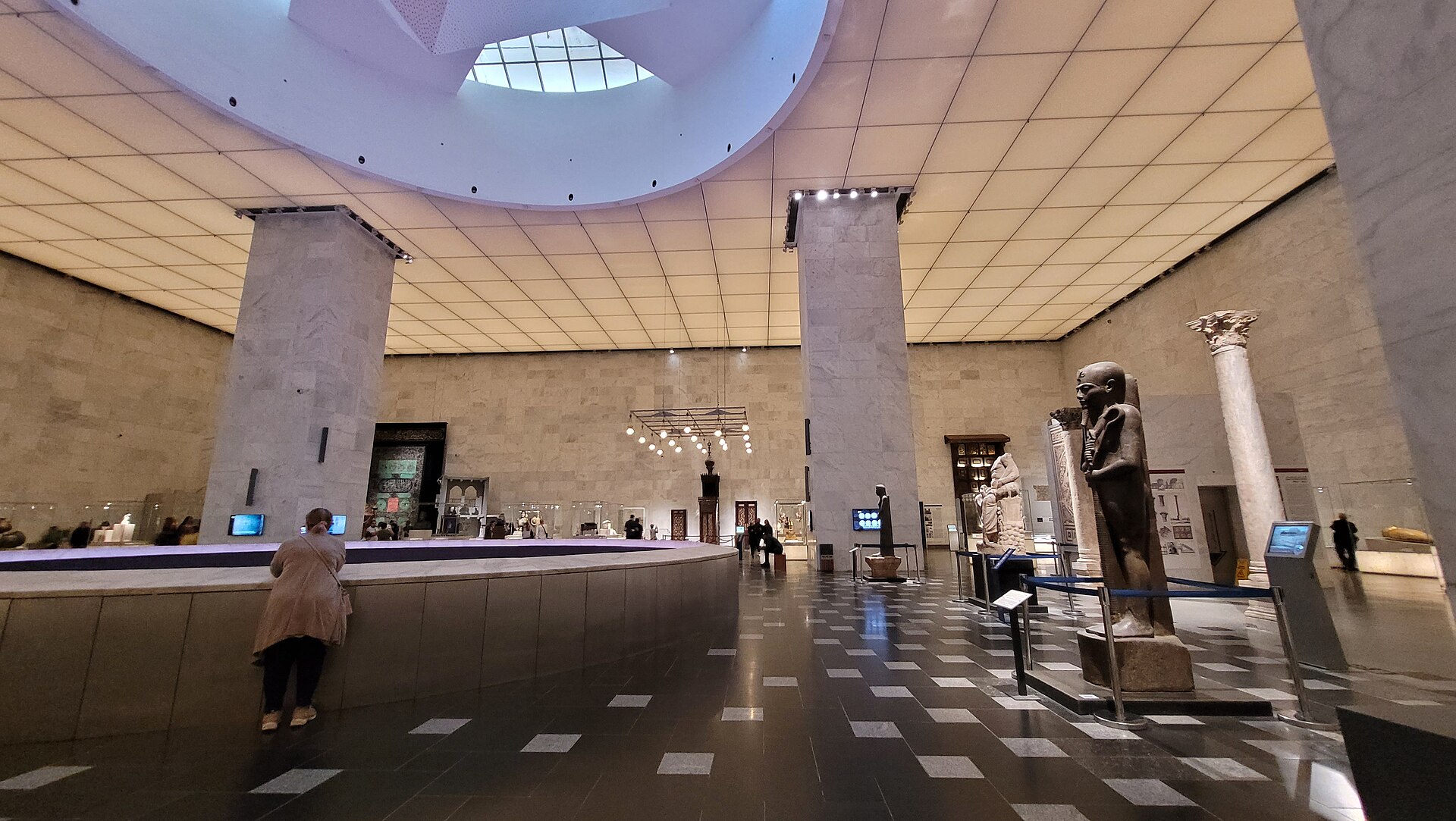
The National Museum of Egyptian Civilization — NMEC, in the shorthand that has taken hold since the museum's partial opening in 2017 and its full inauguration in April 2021 — is unlike any other institution in the country. Where the Egyptian Museum in Tahrir and the Grand Egyptian Museum focus on the pharaonic civilisation, NMEC was conceived to tell the whole Egyptian story: prehistoric settlement in the Nile valley, the Old, Middle, and New Kingdoms, the Graeco-Roman period, Coptic Egypt, Islamic Egypt, and modern Egypt from the nineteenth century to the present day. In practice, it is the only museum where a visitor can walk, in a single morning, from a 300,000-year-old hand-axe to a Cairo street sign from the 1952 revolution.
A museum built around a concept
The project was first proposed in 1982 as a UNESCO-backed initiative, and the foundation stone was laid in 2002 on a fifty-acre site in Fustat, on the southern edge of Cairo. Fustat is the oldest Islamic settlement in Egypt — the original capital founded by Amr ibn al-As after the Arab conquest in 641 CE — and its selection as the museum's location was deliberate. The site overlooks Ain al-Sira, a natural lake surrounded by the remains of pre-modern Cairo, and its symbolic association with continuity rather than rupture is written into the museum's programme.
Construction was protracted, interrupted by political transitions, and finally concluded in stages. A preview gallery opened in 2017, and the museum was formally inaugurated on 3 April 2021 — an inauguration that doubled as the closing ceremony of the Pharaohs' Golden Parade, in which twenty-two royal mummies were transferred from the Egyptian Museum in Tahrir to NMEC's purpose-built Royal Mummies Hall.
Architecture: a quieter kind of statement
The building, designed by the Egyptian architect El-Ghazzali Kosseiba, is deliberately restrained. Unlike the Grand Egyptian Museum, which reads as a monumental gesture toward the pyramids, NMEC sits low to its site, clad in pale stone, and organised around interior courtyards. The main chronological gallery is a long, high-ceilinged hall lit partly from above. The Royal Mummies Hall, reached by a descent from ground level, is the museum's one overtly theatrical space: a vaulted chamber in low light, with each mummy displayed individually in a climate-controlled vitrine.
The restraint is the point. NMEC's argument is that Egyptian civilisation is not reducible to the pharaonic period, and its architecture refuses to privilege any single chapter of the national story over the others.
The Royal Mummies Hall
The centrepiece of the museum, and the reason most first-time visitors come, is the Royal Mummies Hall. The hall holds the mummies of eighteen kings and four queens of the New Kingdom, including Ramesses II, Ramesses III, Seti I, Thutmose III, Hatshepsut, and Tiye. These are the same mummies that generations of visitors encountered in the crowded upstairs gallery of the Egyptian Museum in Tahrir, and their relocation to NMEC was the culmination of a multi-decade effort to display them under conditions appropriate to their scientific and cultural value.
The presentation is characteristic of the museum's overall approach: each mummy is shown at eye level, in a dimly lit case, with a label that treats the individual as a historical person rather than as an artefact. Photography is not permitted. The hall is visited, by convention, in silence, and the experience is one of the most affecting in any Egyptian museum.
The main chronological gallery
Beyond the Royal Mummies Hall, the main display gallery traces Egyptian history in an unbroken arc across seven thematic zones: the dawn of civilisation, the Nile, writing, state and society, material culture, beliefs and thought, and the gallery of royal crafts. The selection is eclectic by design. A single case might hold a Fayum mummy portrait next to a Coptic liturgical vessel, or a Graeco-Roman coin next to a medieval Islamic ceramic — a juxtaposition that emphasises continuity rather than disjuncture.
Objects we draw particular attention to on a first visit include:
- The prehistoric and Predynastic material, which is often neglected in other museums but at NMEC receives a dedicated zone. The Naqada pottery, the Hierakonpolis figurines, and the early agricultural tools are essential for understanding what came before the pyramids.
- The Old Kingdom statuary, including a seated figure of Khafre and several Fifth-Dynasty private statues.
- The Coptic textiles, many of them in exceptional condition, which bridge the late antique and early medieval periods.
- The Islamic-period manuscripts and decorative arts, including inlaid woodwork, lustreware ceramics, and bronze lamps from the Fatimid and Mamluk periods.
- The modern Egyptian section, which includes material related to the 1919 and 1952 revolutions, photographs from the construction of the Aswan High Dam, and objects from twentieth-century Egyptian public life.
The Pharaohs' Golden Parade
The museum's inauguration on 3 April 2021 was preceded by a televised procession — formally titled the Pharaohs' Golden Parade — in which the twenty-two royal mummies were transported in gold-decorated vehicles from Tahrir Square to NMEC, a distance of some seven kilometres through central Cairo. The route was cleared, the road surface was re-laid, and the procession was accompanied by a military escort and a specially composed choral piece performed at the museum's entrance.
For Egyptian audiences, the event had a significance beyond its ceremonial character. For decades, the royal mummies had been displayed in conditions that many Egyptologists regarded as inadequate, and their transfer to a purpose-built facility was understood as a belated act of care. Internationally, the broadcast reached an estimated audience in the hundreds of millions and marked the first occasion on which the Egyptian state had presented its pharaonic heritage on such a scale and in such a self-consciously theatrical form.
Practical notes
The museum is located in Fustat, approximately fifteen minutes south of central Cairo by taxi. It can also be reached on foot from the Mar Girgis metro station, which sits in the Coptic Cairo district — making a combined visit to NMEC and the Coptic Museum, which we cover separately, a logical plan for a morning or afternoon. Tickets are sold separately for the main museum and the Royal Mummies Hall. Photography is permitted in the main galleries but forbidden in the Royal Mummies Hall.
We recommend beginning with the main chronological gallery and descending to the Royal Mummies Hall at the end of the visit. The emotional register of the hall is distinct from the rest of the museum, and it benefits from being approached last rather than first.
A note on curatorial ambition
The National Museum of Egyptian Civilization is, in some ways, the most intellectually ambitious of the three major Cairo museums. Where Tahrir and GEM are defined by what they hold — the original collection of pharaonic antiquities in one case, the Tutankhamun material in the other — NMEC is defined by an argument about what Egyptian civilisation is. That argument, plainly stated, is that the pharaonic period is one chapter in a longer story that includes Coptic Christianity, medieval Islam, and the modern nation state, and that no one of these chapters should be understood apart from the others.
Whether visitors leave the museum persuaded of that argument depends, in the end, on how much time they are willing to give it. The museum is not optimised for the short visit. For those who come prepared for several hours, however, it offers something that no other institution in the country does: a sustained answer to the question of what, over five millennia, has made Egypt Egyptian.

Mariam Fahmy
Mariam holds an MA in Egyptology from the American University in Cairo and has written about museum culture for regional publications since 2014. She leads our Cairo coverage.
More from our archive
 Cairo
Cairo
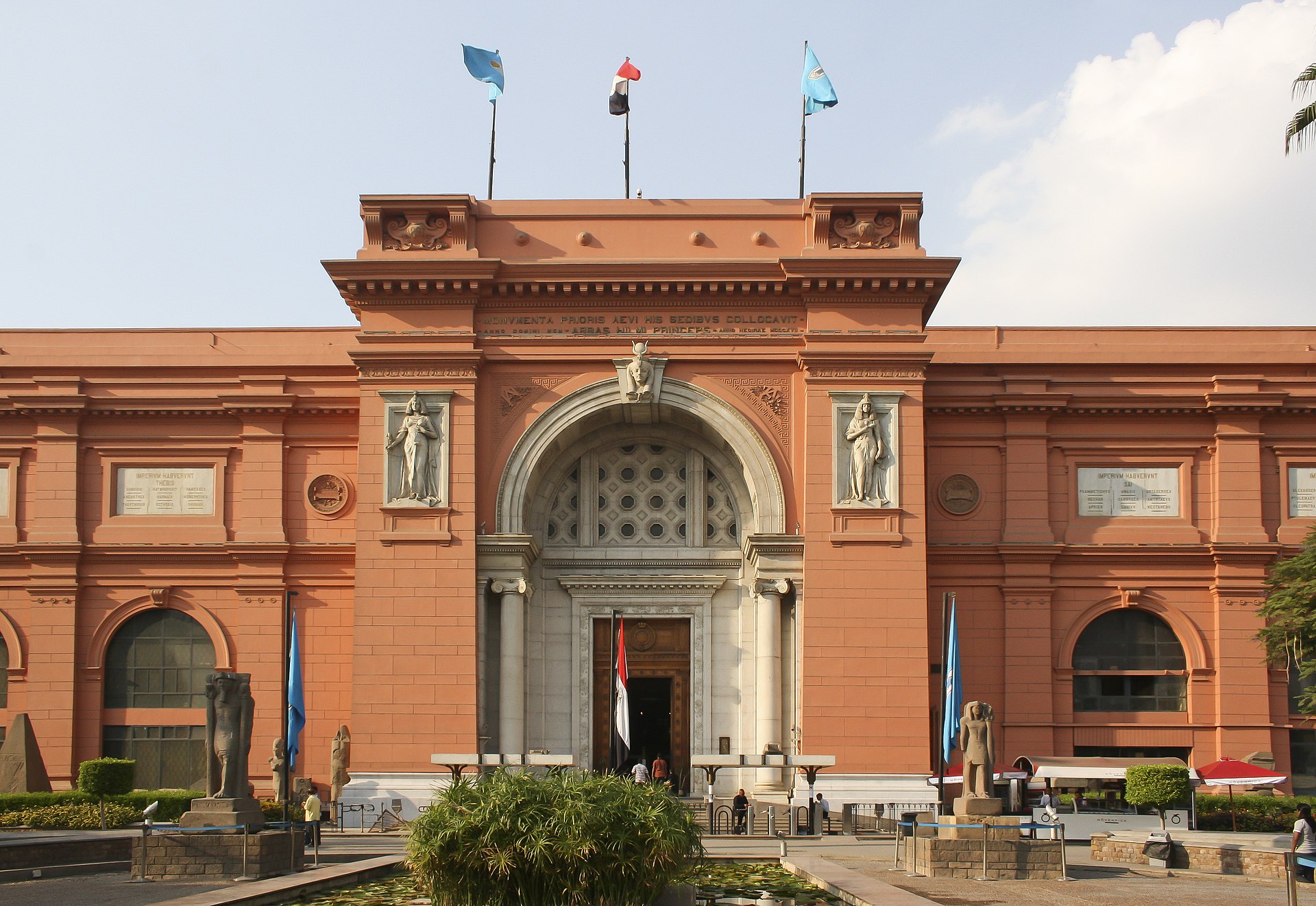
The Egyptian Museum in Cairo: A Journey Through 120 Years of History
Founded in 1902, the Tahrir Square institution holds the world's largest collection of pharaonic antiquities. A look at its architecture, its most iconic halls, and what remains after the Tutankhamun collection moved to GEM.
 Giza
Giza
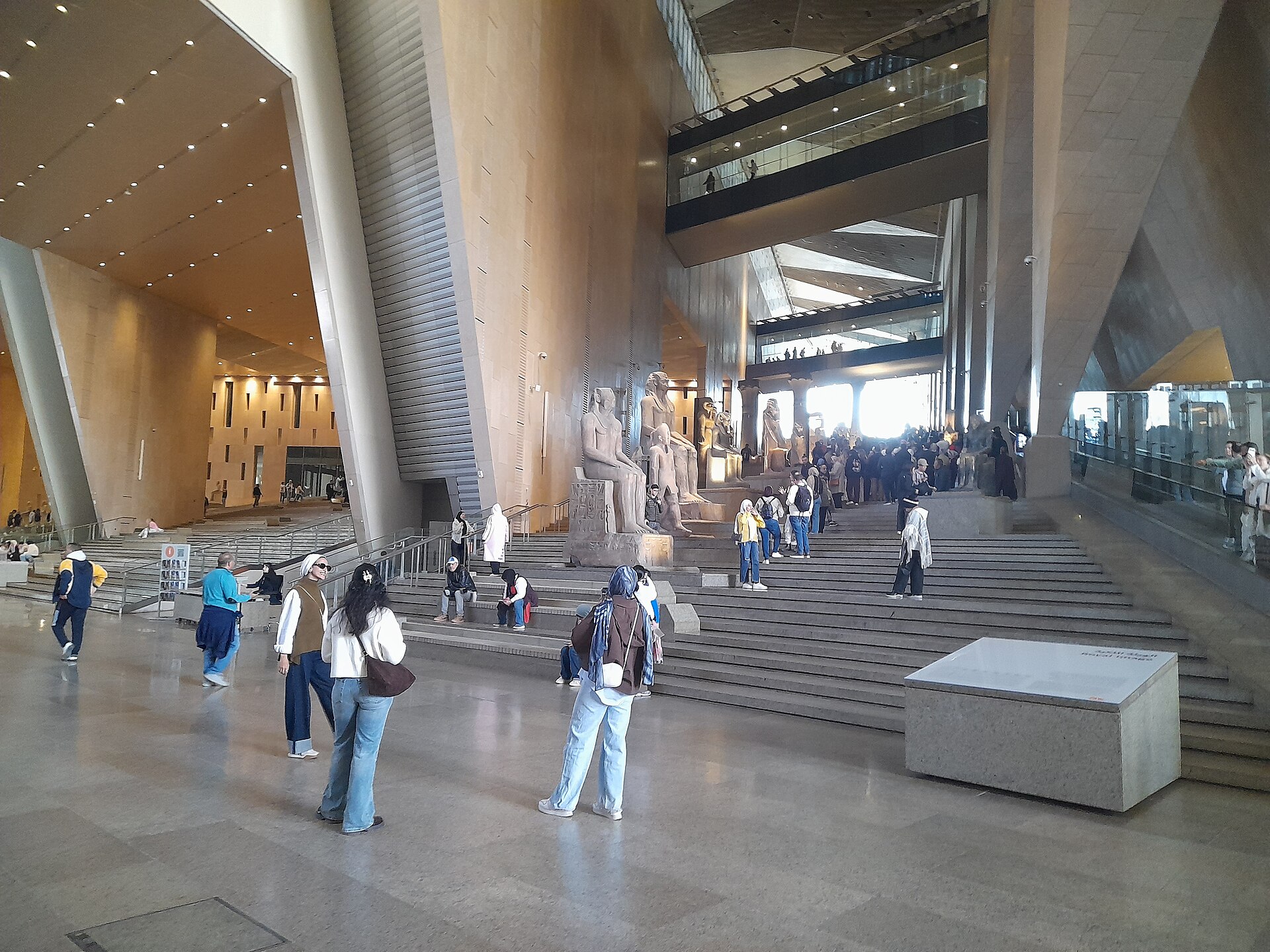
The Grand Egyptian Museum (GEM): The World's Largest Archaeological Complex
After more than two decades in the making, the Grand Egyptian Museum near the Giza Plateau is now the defining institution for the pharaonic era. Inside its halls, its scale, and the full Tutankhamun collection on public display for the first time.
 Luxor
Luxor
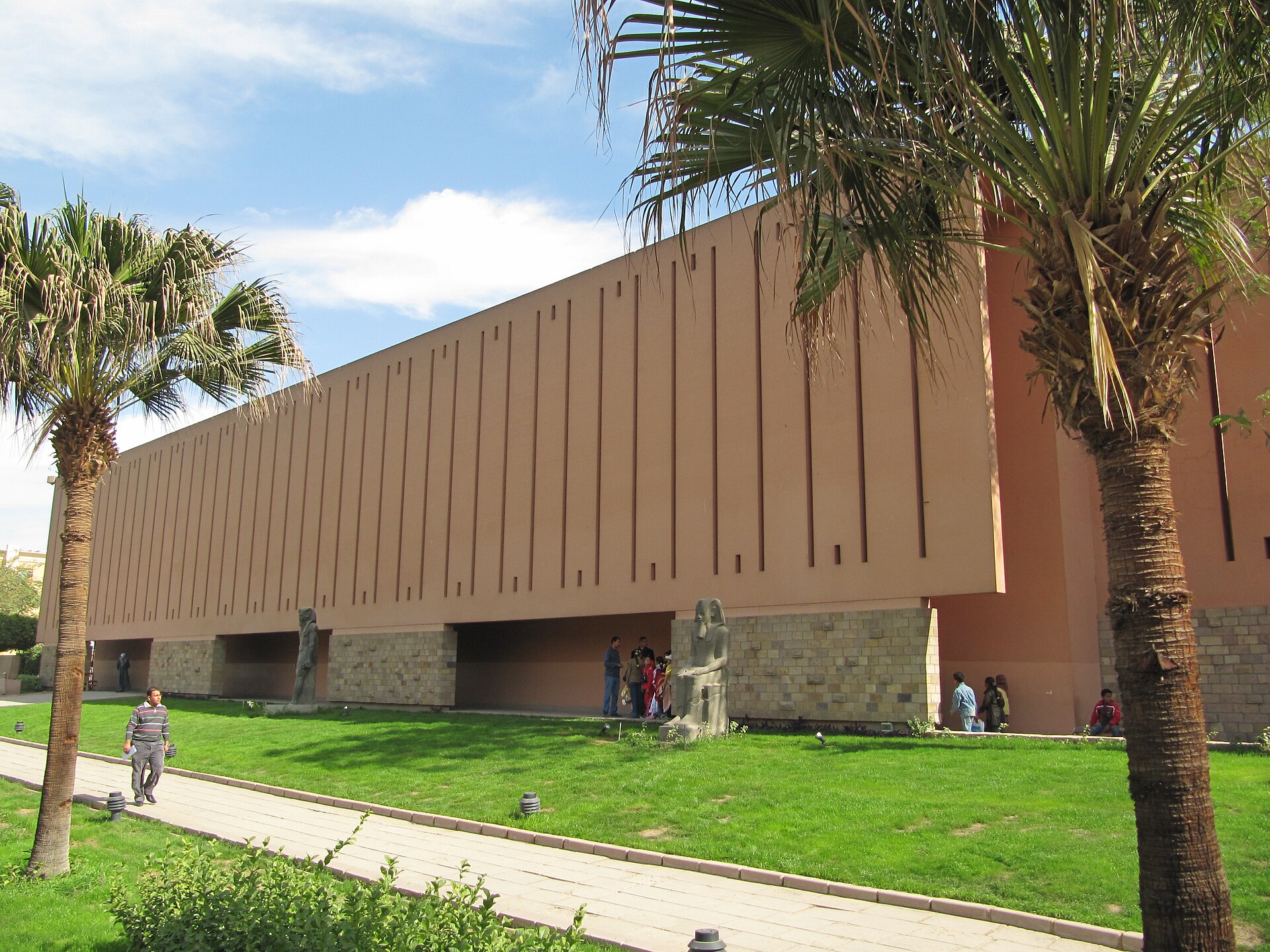
Luxor Museum: The Heart of Ancient Thebes
Opened in 1975 on the east bank of the Nile, the Luxor Museum is deliberately small and deliberately curated. A guide to its two royal mummies, the Karnak Cachette finds, and why many Egyptologists consider it the country's most elegant display.