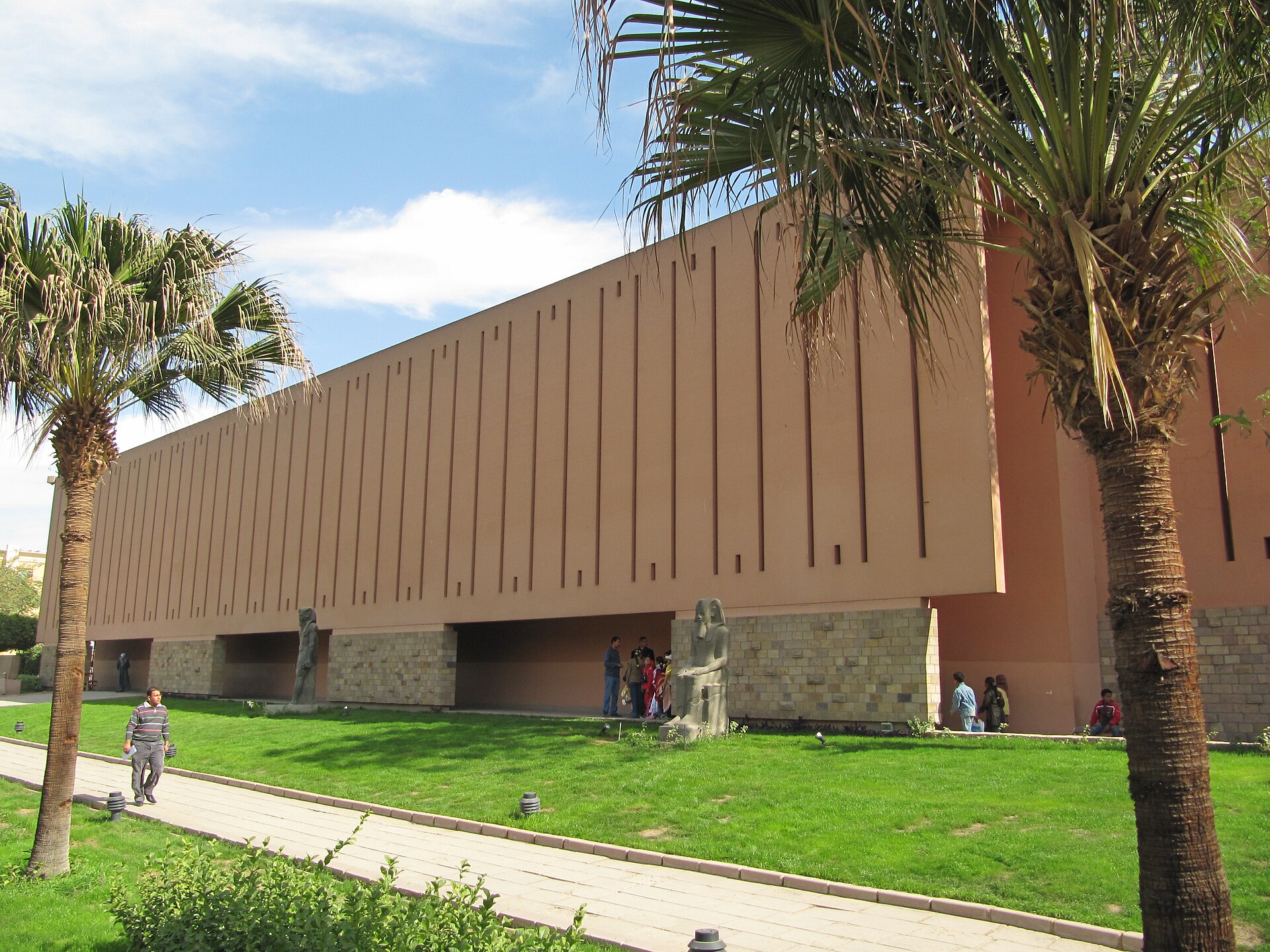
The Luxor Museum is the counter-argument to the monumental scale of Cairo's pharaonic institutions. Opened on 12 December 1975 on the east bank of the Nile, roughly halfway between the Luxor and Karnak temple complexes, it holds fewer than four hundred objects — a fraction of one per cent of the Egyptian Museum's collection — and presents them in a building that a visitor can walk through comfortably in two hours. Many Egyptologists working today regard it, precisely for this reason, as the most elegant pharaonic museum in Egypt. What the Luxor Museum gives up in breadth, it recovers in depth, in the quality of its installation, and in a curatorial discipline that has been exercised consistently over five decades.
A museum for a single region
The museum was conceived in the late 1960s as a response to a specific problem. Thebes — the ancient city that occupied both banks of the Nile at modern Luxor — had been producing an extraordinary density of archaeological finds for more than a century. Much of the best material was being removed to Cairo, where it was displayed alongside objects from all periods and all regions of Egypt. The proposal for a Luxor museum was, in effect, an argument for regional coherence: that objects from Thebes should be shown in Thebes, and that a small, carefully curated selection would tell the local story more clearly than a larger but more diffuse display.
The building is the work of the Egyptian architect Mahmoud El-Hakim, whose design sits low on the Corniche with its back to the Nile. It is a single long hall on two levels, with a ramp rather than a staircase connecting them, and with cases arranged to allow objects to be viewed from multiple sides. The lighting, then as now, is low. The walls are neutral. The labels are in Arabic, English, and occasionally French.
The Karnak Cachette and its echoes
A significant portion of the museum's collection comes from the Karnak Cachette — a trove of more than seven hundred statues and stelae discovered in 1903 by Georges Legrain in a courtyard of the Karnak temple. The cachette, which had been buried in antiquity, contained royal and private statues ranging in date from the Middle Kingdom to the late Ptolemaic period. The majority of the find went to the Egyptian Museum in Cairo. A selection of the finest pieces was reserved for the Luxor Museum, where they are now displayed in the ground-floor galleries.
Two pieces in particular draw visitors to the Cachette galleries. A standing statue of Thutmose III in grey granite, on the ground floor, is considered one of the finest royal portraits to survive from the New Kingdom. Its surface has been worked to an extraordinary smoothness; the facial modelling is restrained and precise. A seated statue of Amenhotep III in black granite, displayed nearby, is larger and more formal, and offers a direct comparison of royal portraiture styles across a generation.
The two royal mummies
A separate wing of the museum, added in 2004, houses two royal mummies: Ahmose I, the founder of the Eighteenth Dynasty, and a mummy traditionally identified as Ramesses I (the identification has been revised and re-revised in the scholarly literature; the museum's current label discusses the uncertainty openly). Both mummies are displayed in climate-controlled cases in a dimly lit chamber that is kept deliberately apart from the main chronological gallery.
The installation is worth noting. Unlike the Royal Mummies Hall in Cairo, which brings together more than twenty mummies in a single space, the Luxor installation shows only two. The effect is quieter and, in the view of many visitors we have spoken to, more affecting. The mummies are treated not as a set but as individuals; each has its own label, its own context, its own small archaeological history.
The Akhenaten wall
One of the most distinctive displays in the Luxor Museum is the reconstructed wall of talatat blocks from the dismantled temples of Akhenaten at Karnak. The talatat — small, standardised sandstone blocks, each roughly 50 by 25 centimetres — were used by Akhenaten's masons to build the Aten temples at Karnak quickly. After the return to orthodoxy under Tutankhamun and his successors, the temples were dismantled and the blocks were reused as fill in other building projects. Archaeologists have spent decades reassembling fragments of the original wall decoration from talatat recovered across the Karnak site.
The Luxor Museum's reconstructed wall is one of the largest assembled anywhere. It shows a scene of life in the Aten temple precinct: offerings being brought, musicians playing, a royal couple under the rays of the sun disc. The piece is both a historical document and a visual argument about the scale and character of Akhenaten's religious project.
A statue cache from the Luxor Temple
In January 1989, workers repairing the paving of the Luxor Temple discovered a second cachette, this one in the temple's solar court. It contained some two dozen statues, deposited in antiquity when the temple was rededicated during the reign of Amenhotep III's successors. The pieces are in exceptional condition — the burial protected them from weathering and from the chisels of later reuse.
The finest statue from the 1989 cachette, a red-quartzite figure of Amenhotep III, is now the signature piece of the Luxor Museum. It stands in a room designed specifically around it, on a circular plinth, with lighting calibrated so that the material of the stone — a deep, almost carmine red — emerges fully. Visitors can circle the statue and observe the subtle asymmetries of the royal portrait, the precision of the regalia, and the condition of the surface. The installation is, in the opinion of our editors, among the most successful single-object displays in any Egyptian museum.
What makes the Luxor Museum work
The museum succeeds because it refuses the temptation of comprehensiveness. There is no Predynastic gallery, no Old Kingdom gallery, no Middle Kingdom or Roman gallery. The collection is concentrated in the periods relevant to Theban history — predominantly the New Kingdom, with secondary attention to the Third Intermediate Period and the Late Period — and the installation is designed accordingly. A visitor is never more than a few paces from the next object; nothing is placed high on a wall or behind glare; the circulation is linear and unambiguous.
This is the opposite of the encyclopaedic ambition that defines the Cairo museums. It is also a model that other regional museums in Egypt — Aswan, Alexandria, Mallawi — have followed with varying degrees of success. The Luxor Museum, by any measure, remains the clearest example of the type.
Practical notes
The museum is located on the Corniche El Nil, approximately a fifteen-minute walk from both the Luxor Temple and the Karnak Temple. Opening hours are split into morning and evening sessions, with a mid-afternoon closure that is standard for Egyptian museums. Admission is sold at the entrance; separate tickets apply for the royal mummies wing. Photography is permitted in the main galleries.
We recommend visiting in the evening. The museum's lighting is calibrated for low ambient light, and the objects come fully into their own when the building is dim and the Corniche outside has quieted. An evening visit can be combined with a walk along the Nile afterwards, or with a dinner in the city centre.
A closing observation
Visitors who come to the Luxor Museum after visiting the Egyptian Museum in Cairo or the Grand Egyptian Museum often remark that they wish they had come the other way round — that they had visited Luxor first, and then moved to the larger institutions. The observation is worth taking seriously. The Luxor Museum teaches a way of looking at pharaonic objects that the larger museums cannot quite replicate: an attention to the individual piece, to its condition, to the specific quality of its material, to the specific place in history from which it comes. That discipline, once acquired, makes every subsequent museum visit richer.

Karim El-Sayed
Karim is a former field archaeologist who worked on excavations in Saqqara and Luxor before turning to journalism. He covers museum openings, restoration projects, and institutional policy.
More from our archive
 Cairo
Cairo
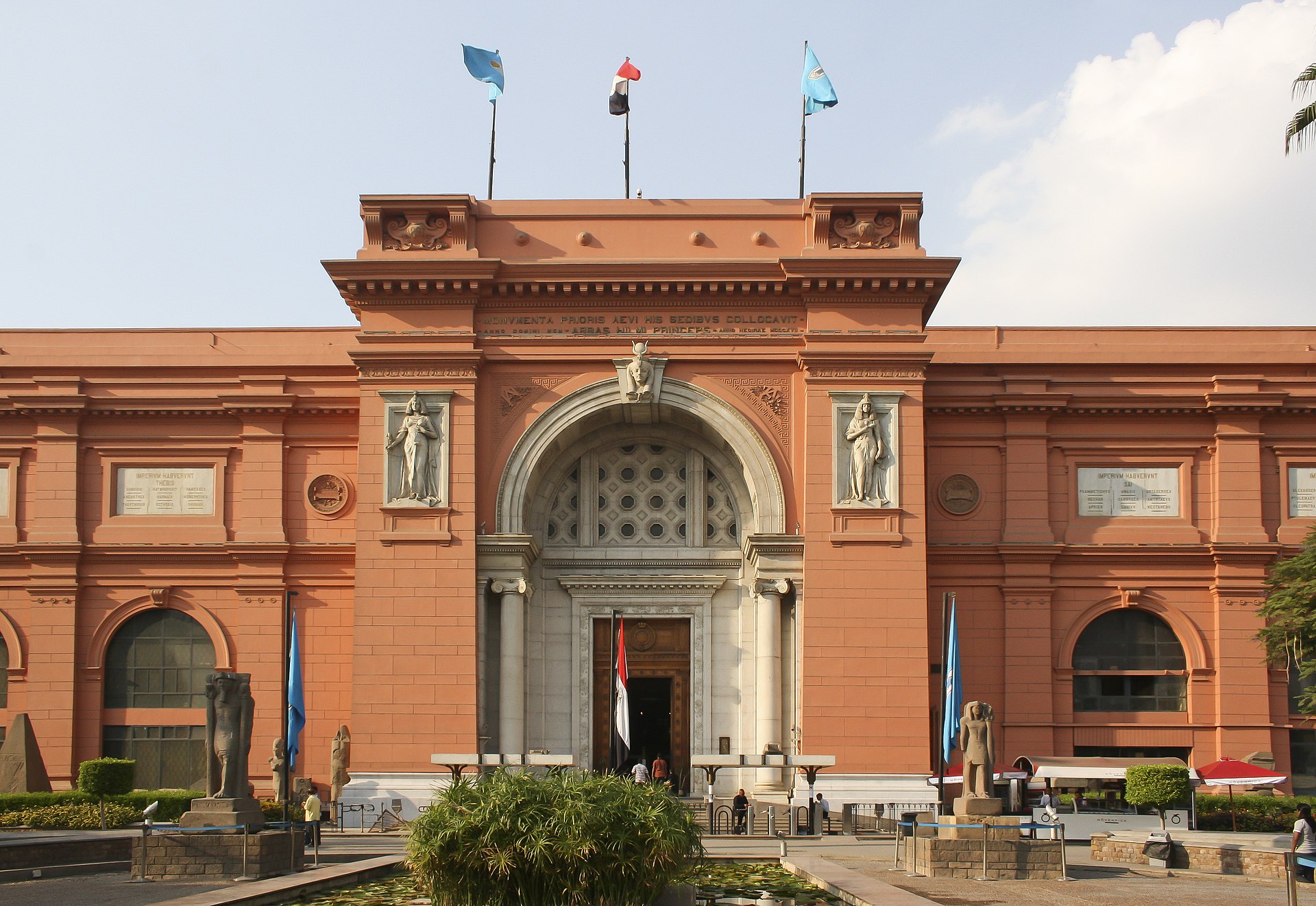
The Egyptian Museum in Cairo: A Journey Through 120 Years of History
Founded in 1902, the Tahrir Square institution holds the world's largest collection of pharaonic antiquities. A look at its architecture, its most iconic halls, and what remains after the Tutankhamun collection moved to GEM.
 Giza
Giza
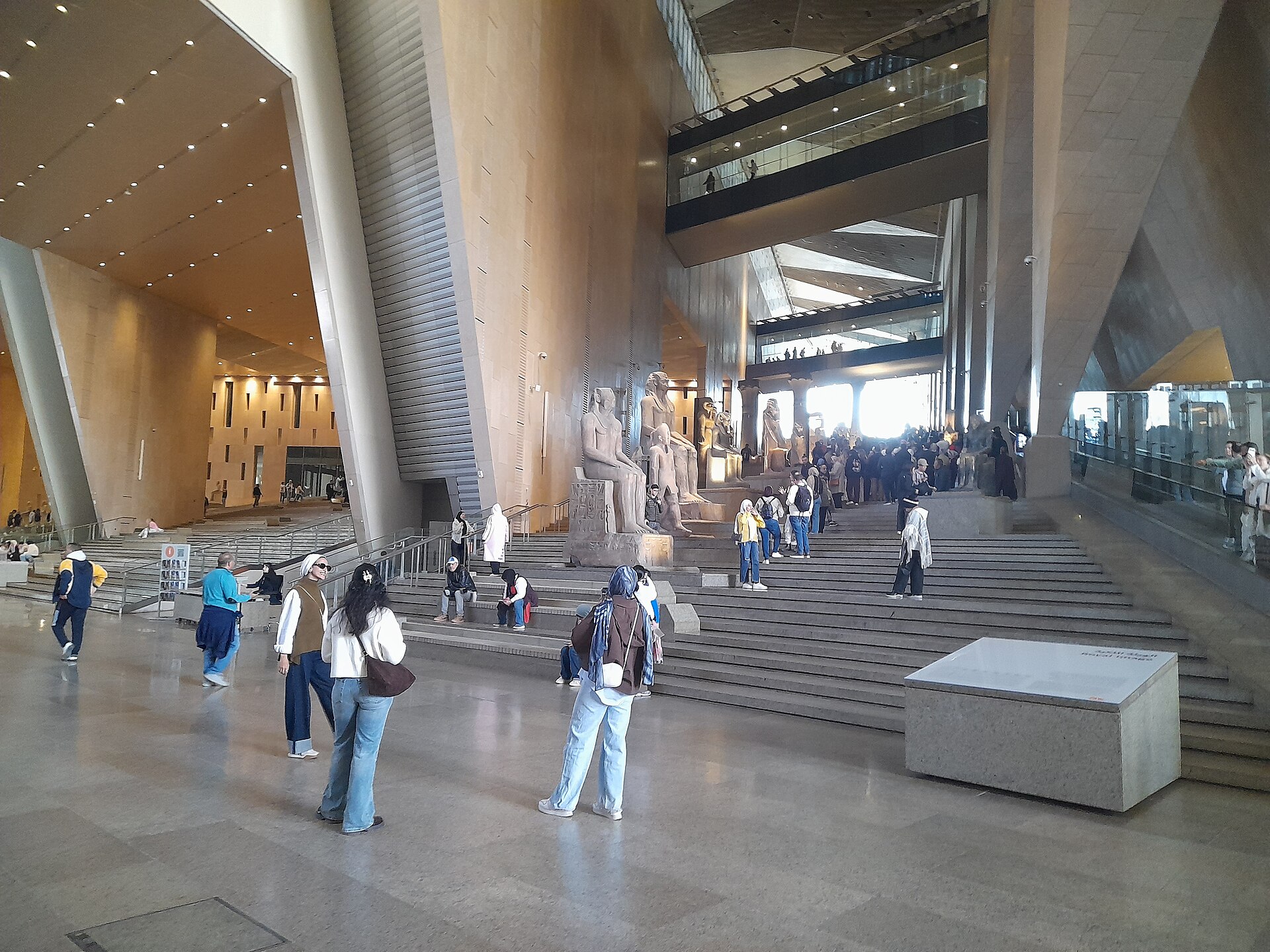
The Grand Egyptian Museum (GEM): The World's Largest Archaeological Complex
After more than two decades in the making, the Grand Egyptian Museum near the Giza Plateau is now the defining institution for the pharaonic era. Inside its halls, its scale, and the full Tutankhamun collection on public display for the first time.
 Cairo
Cairo
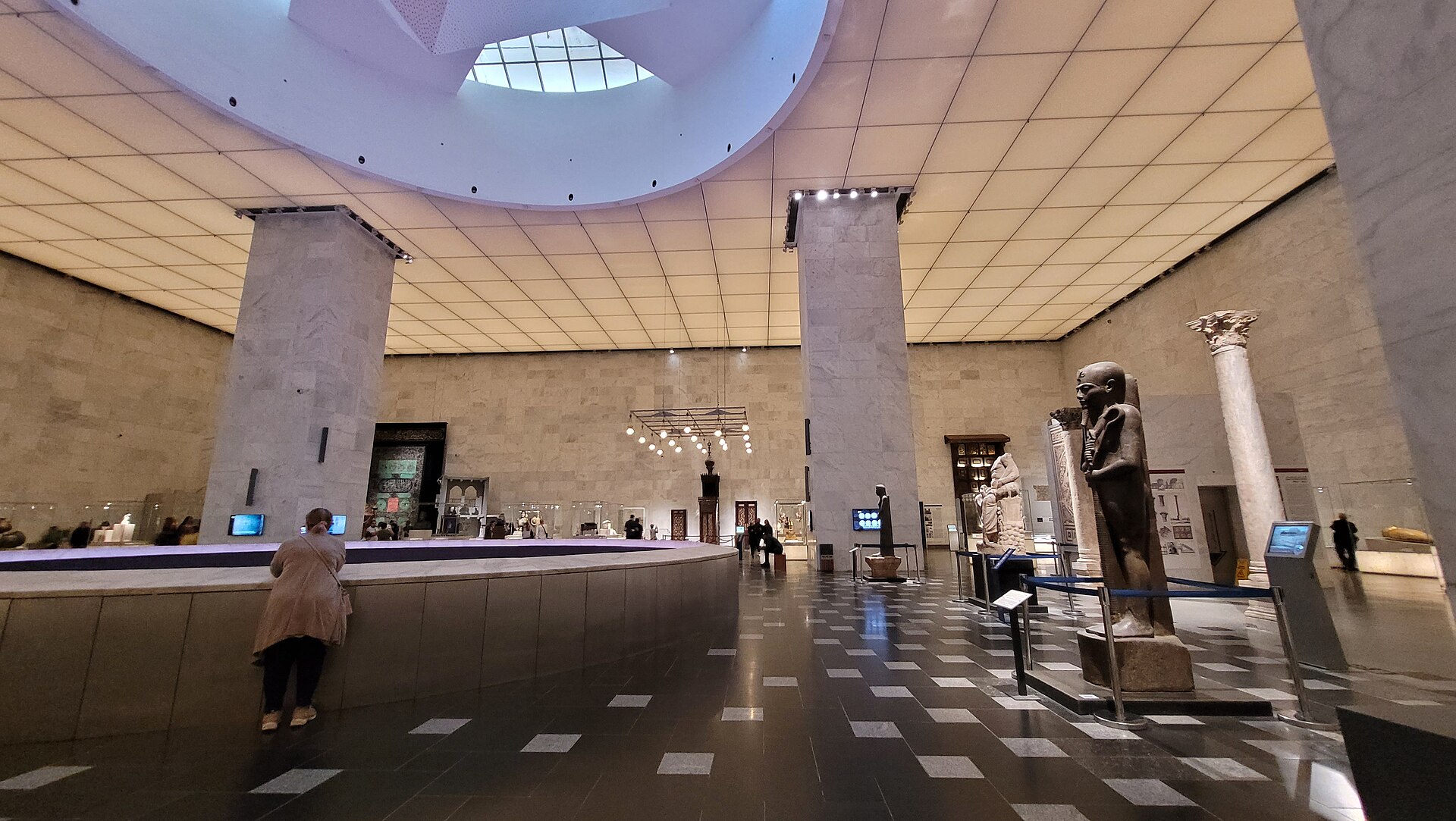
The National Museum of Egyptian Civilization (NMEC): From Prehistory to Modernity
The NMEC in Fustat is the only Egyptian institution telling the full national story — from prehistoric settlements to contemporary Egypt. Its Royal Mummies Hall, the 2021 Pharaohs' Golden Parade, and what makes its curatorial approach distinctive.