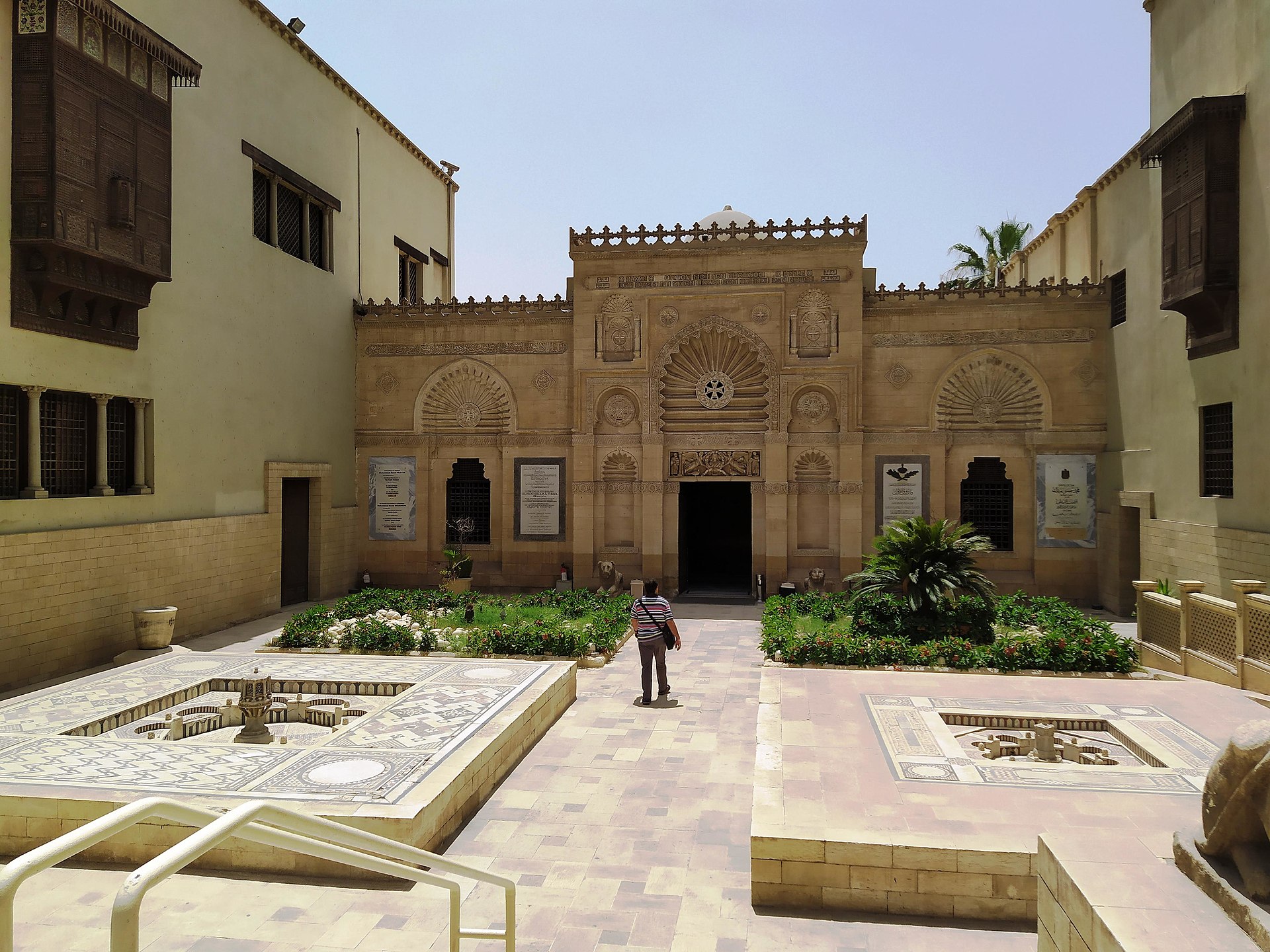
The Coptic Museum sits inside the walls of the Babylon Fortress in Old Cairo, across a narrow lane from the Hanging Church and a short walk from Ben Ezra Synagogue and the Mosque of Amr ibn al-As. Its setting is part of its argument. The museum holds the world's largest collection of Coptic art — the Christian art of Egypt from the third century CE to the early medieval period — and it is installed, deliberately, in the oldest continuously inhabited quarter of Cairo, the district where Egyptian Christianity has had a recorded physical presence for more than sixteen centuries. To visit the Coptic Museum is to visit an institution whose building, collection, and surrounding neighbourhood are all aspects of the same heritage.
Foundation and history
The museum was founded in 1910 by Marcus Simaika, a Coptic civic leader who had been campaigning since the late nineteenth century for a dedicated institution to preserve the material heritage of Egyptian Christianity. Before the museum's establishment, Coptic art had been held largely in private hands or, in the case of the most significant pieces, absorbed into the general collections of the Egyptian Museum in Cairo, where it was displayed alongside pharaonic and Graeco-Roman material without the benefit of a Coptic-specific curatorial frame.
Simaika's argument — that Coptic art constituted a distinct tradition with its own iconographic conventions, its own periodisation, and its own historical significance — was not obvious to every audience of his time. It required the patient accumulation of a collection, the building of a scholarly infrastructure, and the physical establishment of a museum in a setting that made the connection between object and community unmistakable. The Coptic Museum opened in 1910 in a purpose-built structure adjacent to the Hanging Church, and expanded in 1947 with a new wing. A comprehensive renovation, which included structural reinforcement and a complete reorganisation of the galleries, was completed in 2006.
The building
The museum is entered through a courtyard, flanked by carved limestone fragments and fitted with a small formal garden. The façade combines elements of Coptic domestic architecture — mashrabiya screens, carved wooden doors, and limestone walls — with the proportions of a late-nineteenth-century civic building. The interior is organised on two floors around a series of themed galleries: stonework, woodwork, metalwork, textiles, manuscripts, paintings, and pottery. Several ceilings are themselves part of the collection: carved and painted wooden ceilings from dismantled Coptic houses of the medieval period, installed overhead so that visitors walk beneath them.
The installation is, by the standards of Egyptian state museums, relatively recent. The 2006 renovation introduced contemporary display cases, improved lighting, and a clearer thematic organisation. Labels are provided in Arabic and English; object information is supplemented, where relevant, with historical and liturgical context.
Continuities with the pharaonic past
One of the museum's implicit arguments is that Coptic art is both a response to the pharaonic past and a continuation of it. A visitor moving through the galleries sees this in recurring motifs: the ankh sign, reinterpreted as the Christian cross; the figure of Isis nursing Horus, reworked as the Virgin with the infant Christ; the funerary portraits of the Fayum, which straddle the pharaonic, Roman, and early Christian periods. A number of early Coptic tombstones in the stonework gallery still carry forms — stylised rosettes, offering tables, echoes of the Ba-bird — that were standard in pharaonic funerary stelae.
This continuity is not an aesthetic accident. Egyptian Christianity developed in a landscape saturated with pharaonic symbolism, and its earliest practitioners drew on the visual vocabulary of their ancestors even as they redirected it to new theological ends. The Coptic Museum is the clearest place to see that process at work.
The textile collection
The museum's textile collection is internationally renowned. Dry Egyptian soil and the conventions of Coptic burial — the deceased were interred in their best clothing, wrapped in household fabrics — have preserved a quantity of late-antique and early-medieval textile that exists nowhere else in the world. The Coptic Museum holds tens of thousands of pieces, of which a selection is on permanent display.
Particularly worth attention are the tapestry-woven wool roundels and panels, often featuring figures of saints, dancers, or hunting scenes, which were inset into linen tunics and shrouds. The iconography ranges across pagan, Christian, and hybrid subjects, with a consistent graphic quality: strong outlines, flattened figures, saturated colours preserved with remarkable vividness.
The Nag Hammadi manuscripts
Among the most historically significant holdings of the museum are the Nag Hammadi codices — a collection of thirteen fourth-century Coptic manuscripts, discovered by chance in 1945 by a farmer in Upper Egypt. The codices contain some fifty-two Gnostic and early-Christian texts, many of them otherwise unknown, including the Gospel of Thomas, the Gospel of Philip, and the Secret Book of John. The discovery transformed the scholarly understanding of early Christianity in Egypt.
The codices are held by the Coptic Museum, with a selection on rotating display. For researchers, access is arranged through the museum's library. The texts are now fully published in critical editions, and English translations are widely available in academic libraries.
Wooden doors, carved panels, and ceilings
The woodwork gallery is, for many visitors, the most visually striking part of the museum. Carved wooden doors and window screens from Coptic churches, chapels, and houses, dating from the sixth to the sixteenth century, are installed along both sides of a long gallery. Many of the doors carry inscriptions — names of donors, liturgical invocations, dates in the Coptic calendar — that are as important historically as the carving itself.
Several medieval ceilings have been installed overhead. These include geometrically inlaid ceilings from abandoned Coptic houses of the Mamluk period, in which small polygonal panels of wood, ivory, and mother-of-pearl have been fitted into star-shaped patterns that recall — and in fact share a workshop tradition with — contemporary Islamic ceiling work. The Coptic and Islamic decorative traditions of medieval Cairo are not, in practice, easy to separate, and the museum's willingness to present this shared heritage without defensiveness is one of its notable virtues.
Icons and painted panels
A separate gallery is devoted to Coptic icons, ranging from early Christian panel paintings to late Byzantine-period and Ottoman-era icons. The collection includes a number of pieces attributed to the workshop of Ibrahim al-Nasikh, the leading Coptic icon-painter of the eighteenth century, whose studio produced a high proportion of the icons still in use in Coptic churches across Egypt. The late icons, with their distinctive flat planes of colour and their restrained approach to facial modelling, constitute a living tradition that continues today.
Practical notes
The Coptic Museum is located in the Mar Girgis district of Old Cairo, immediately adjacent to the metro station of the same name. Access by metro is the most reliable option — the station sits directly outside the museum gate, and a combined visit to the museum, the Hanging Church, the Church of St Sergius, and Ben Ezra Synagogue can easily be completed on foot in a single morning.
The museum is open daily with the standard split-session opening hours. An adult ticket is modestly priced. Photography is permitted in most galleries. The museum's bookshop, while small, carries a useful selection of academic publications on Coptic art and history.
Because a visit to the Coptic Museum is most rewarding when combined with a walk through the surrounding quarter, we recommend beginning at the museum, walking south to the Hanging Church, and then proceeding through the narrow lanes toward Ben Ezra Synagogue and the Church of St Sergius. The walk provides a sense of how a thousand-year-old religious neighbourhood still functions as one.
Why the Coptic Museum matters
The Coptic Museum is, in a quiet way, an essential counterweight to the pharaonic museums that dominate the Egyptian tourist itinerary. The pharaonic period was long, and the Graeco-Roman period that followed it was substantial, but together they represent less than half of the historical span of organised Egyptian civilisation. The Coptic and Islamic periods that followed are, in aggregate, longer than the pharaonic era that preceded them, and have shaped every aspect of the modern country — its language, its architecture, its social institutions, its cuisine. The Coptic Museum is the single most important place in Egypt where the Christian chapter of that longer story is treated at the scale of its actual significance.

Dina Saleh
Based in Aswan, Dina writes about Nubian heritage, Coptic history, and museums outside the Cairo-Giza corridor. Her work has appeared in regional heritage journals.
More from our archive
 Cairo
Cairo
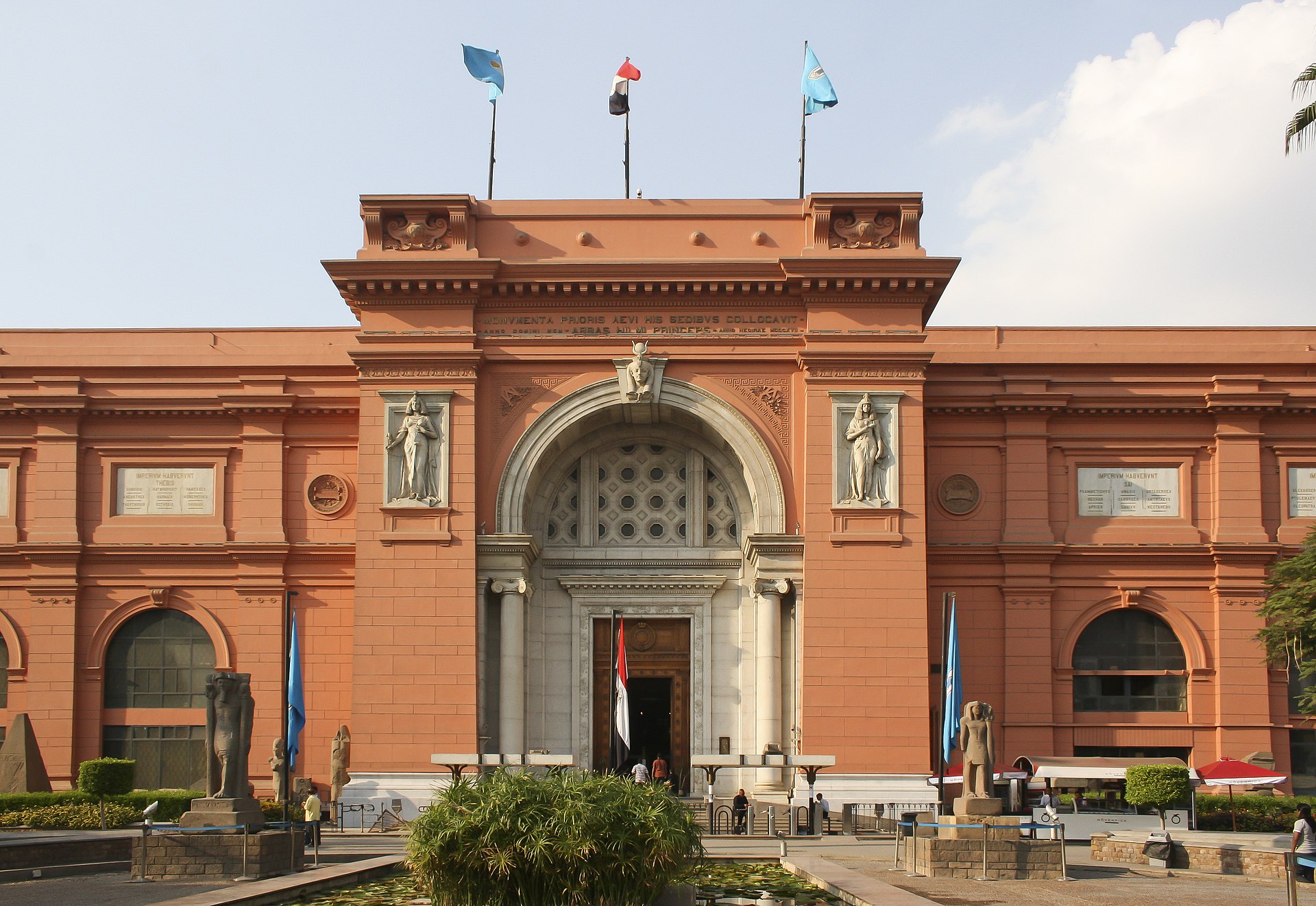
The Egyptian Museum in Cairo: A Journey Through 120 Years of History
Founded in 1902, the Tahrir Square institution holds the world's largest collection of pharaonic antiquities. A look at its architecture, its most iconic halls, and what remains after the Tutankhamun collection moved to GEM.
 Giza
Giza
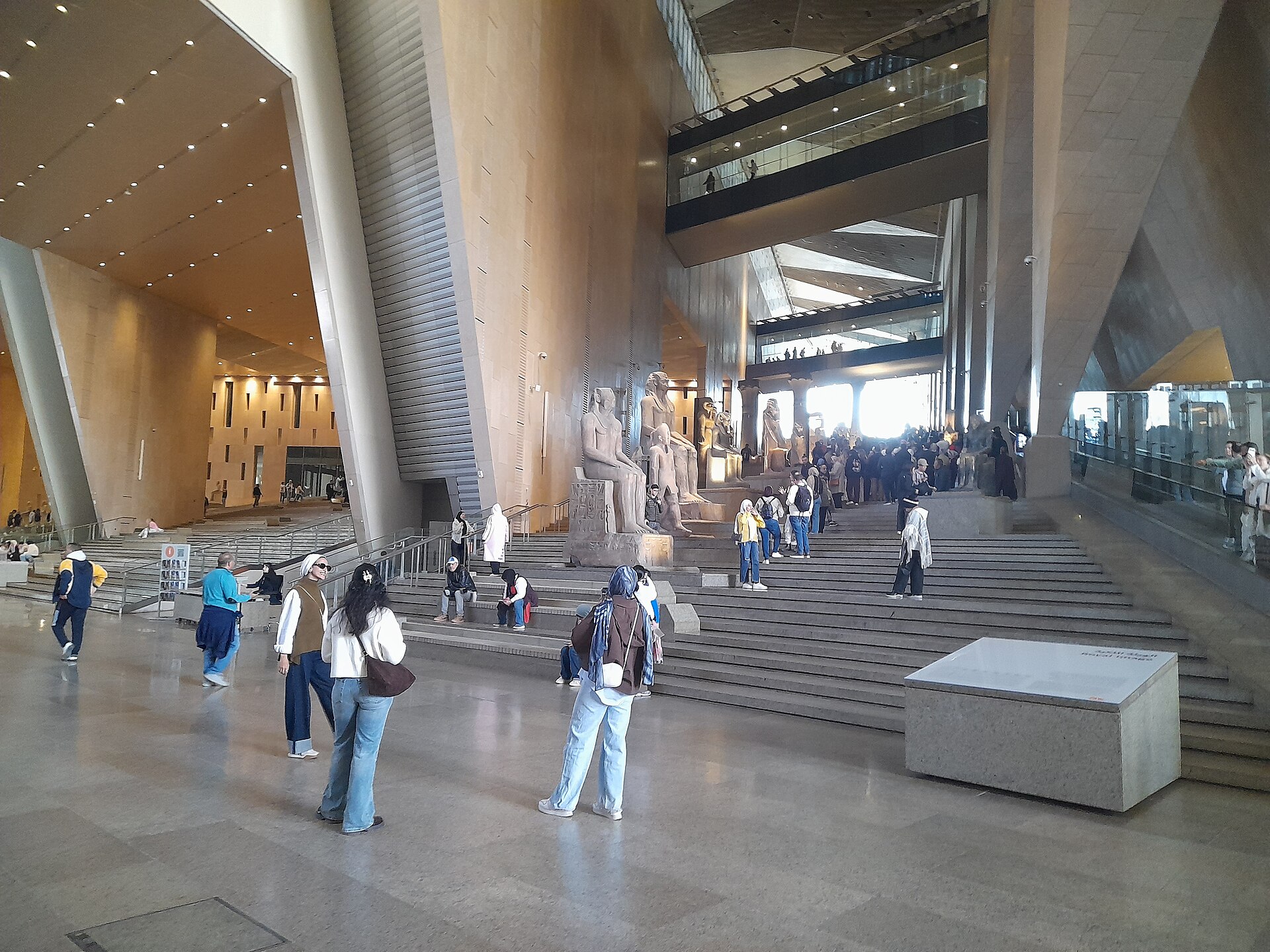
The Grand Egyptian Museum (GEM): The World's Largest Archaeological Complex
After more than two decades in the making, the Grand Egyptian Museum near the Giza Plateau is now the defining institution for the pharaonic era. Inside its halls, its scale, and the full Tutankhamun collection on public display for the first time.
 Cairo
Cairo
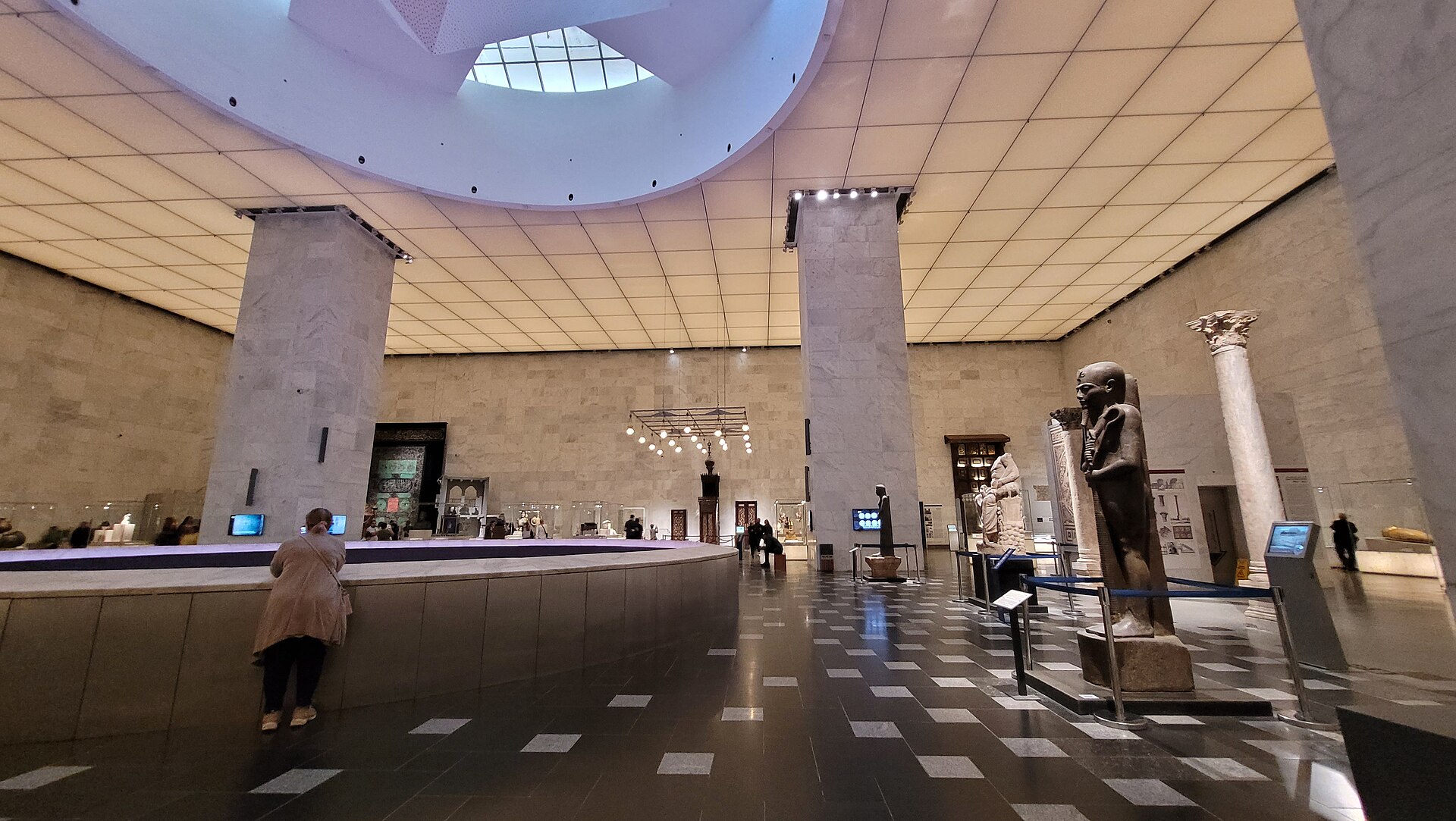
The National Museum of Egyptian Civilization (NMEC): From Prehistory to Modernity
The NMEC in Fustat is the only Egyptian institution telling the full national story — from prehistoric settlements to contemporary Egypt. Its Royal Mummies Hall, the 2021 Pharaohs' Golden Parade, and what makes its curatorial approach distinctive.